
Providing Aggressive
and Compassionate
Representation.
and Compassionate
Representation.
Guiding You Through Difficult Proceedings.

At Findley-Wolf Law, we represent individuals facing petitions for domestic violence protection orders, commonly referred to as DVPOs, in King County and surrounding Washington communities. These proceedings often move with little warning and can impose significant restrictions within a very short period of time. Courts may issue temporary orders before the accused person has an opportunity to respond, potentially limiting where someone may go, restricting contact with family members or household members, and requiring the surrender of firearms under Washington law. Although the process begins as a civil matter, the allegations involved frequently carry serious personal and legal consequences.
Protection order cases exist at the crossroads of civil litigation and criminal law. While the hearing itself is civil in nature, violating a protection order can lead to criminal charges, and the allegations presented in the petition may influence future decisions by law enforcement, prosecutors, and family courts. A single petition can therefore affect multiple areas of a person’s life, including criminal investigations, parenting disputes, and long term reputation. Because of these overlapping risks, responding to a protection order requires careful preparation and a defense strategy that considers both the immediate hearing and the broader legal implications.
Attorneys Natalie Findley-Wolf and Samuel J. Wolf bring extensive experience defending individuals in protection order hearings and related criminal matters throughout King County courts. Their work regularly involves evaluating complex factual allegations, challenging unsupported claims, and presenting evidence in fast moving court proceedings where early decisions can have lasting effects. They understand the local court procedures, evidentiary expectations, and judicial considerations that shape protection order hearings across the region.
At every stage of the case, our firm focuses on helping clients navigate what is often a stressful and confusing legal process. We work to provide clear guidance, strategic advice, and strong courtroom advocacy while remaining attentive to the long term consequences that protection order proceedings can create. Our goal is not only to respond effectively to the immediate allegations but also to protect our clients’ rights, relationships, and future opportunities.
In Washington State, a domestic violence protection order is a type of civil protection order authorized by the Revised Code of Washington Chapter 7.105 that is available when there are allegations of domestic violence between family or household members. “Domestic violence” in this context includes acts or threats of physical harm, assault, stalking, sexual assault, or harassment involving a current or former spouse, dating partner, family member, or someone who has lived with you.
A DVPO can prohibit contact or communication, require a respondent to stay away from certain locations (like home or work), and mandate other restrictions. The petitioner asks the court for this relief by filing a petition with the appropriate court, most commonly a District Court or Superior Court. A judge may issue a Temporary Protection Order (TPO) on an emergency basis, often without the respondent present, followed by a full hearing where both sides can present evidence.
It is critical to understand that a DVPO is a civil order. However, the consequences of these orders are not purely civil in nature: violation of an order is a criminal offense under Washington law, potentially resulting in arrest, prosecution, fines, or jail time. Additionally, a protection order can influence parallel or future criminal cases, custody disputes, employment, housing, and professional licensing.
Proceedings typically start when a petitioner files a written petition alleging specific acts that qualify as domestic violence. The petitioner must provide factual details describing dates, circumstances, and the nature of the harm alleged. The standard for all protection order hearings, whether temporary or not – is a preponderance standard – meaning, “more likely than not.” All a petitioner needs to prove is that the harm happened, and is not required to prove any present circumstances. This threshold is lower than the criminal standard of “beyond a reasonable doubt.”
At the full hearing, usually scheduled approximately 14 days after issuance of a temporary order , both sides have the opportunity to present testimony, evidence, and witnesses.
It is important to understand that a civil protection order is separate from any criminal charges that might arise from the same underlying events. Washington criminal statutes such as RCW Title 9A define assault, stalking, harassment, and other offenses that may accompany a domestic violence incident. A criminal charge can lead to incarceration, fines, probation, and long-term criminal records. A civil protection order itself does not carry criminal penalties unless someone violates its terms.
The civil protection order process focuses on immediate safety concerns and does not require proof beyond a reasonable doubt. In contrast, a criminal case requires the State to prove each element of a crime to a jury or judge beyond a reasonable doubt. This distinction means many people find themselves defending on two fronts, one in civil court for the protection order and one in criminal court for potential charges. Effective representation must address both seamlessly.
The issuance of a DVPO alters the landscape of your personal life immediately. Law enforcement officers are authorized to serve the order and, in many cases, enforce the no-contact provisions. If you are the respondent, you are legally bound to comply with all terms of the order, even if you plan to contest it at a later hearing. Violating the order can result in criminal charges for Violation of a Protection Order, which under Washington law can be charged as a misdemeanor or felony depending on the circumstances.
Non-compliance can also harm your standing in parallel family law matters, including custody and parenting time decisions. Family courts in Washington consider the existence of protective orders when assessing the best interests of a child, and a protective order can impact employment, professional licensing, housing, and immigration status. This makes early counsel essential.
Protection order cases unfold quickly, and decisions made in the first days can shape how the entire matter proceeds. At Findley-Wolf Law, we start by evaluating the petition thoroughly, identifying strengths and weaknesses in the allegations, and crafting a response that protects your rights, your story, and your dignity. We advise you on how to behave while the order is in effect and how to prepare for your first hearing. Early intervention can make a critical difference in setting the tone of litigation.
We help clients gather evidence that may include text messages, social media posts, contemporaneous communications, medical records, and witness statements. We analyze whether allegations satisfy the statutory definitions under RCW 7.105 and whether the petitioner’s narrative is supported by admissible evidence. At the hearing, we cross-examine the petitioner and any witnesses, challenge improper or irrelevant evidence, and argue compellingly on your behalf.
If a protection order arises alongside criminal charges for domestic violence, assault, harassment, or other related offenses, we integrate those defenses. Criminal defenses may include arguing for evidentiary exclusion motions, challenging probable cause, or asserting lawful self-defense under RCW 9A.16.020 when appropriate. We coordinate defense strategies across both civil and criminal proceedings to protect your overall interests.
We file timely motions as needed. At every turn, our advocacy is grounded in legal precision and strategic insight. We work to ensure that judges are presented with the strongest possible factual and legal case on your behalf.
If a final protective order is issued, it may remain in effect for up to one year, and in some cases the court may enter a longer order or extend it upon request. The conclusion of the hearing is not the end of strategic planning. A final order can affect housing arrangements, firearm rights, family law cases, and future court proceedings. It can also serve as a foundation for enhanced penalties if an alleged violation occurs later.
We continue evaluating your legal options after the court’s ruling. When appropriate, we can pursue a motion to revise, modify, or terminate the order if there has been a substantial change in circumstances. In certain situations, appellate review may also be considered. Each case requires careful analysis of the record, the court’s findings, and the practical consequences of continued litigation.
At the same time, we provide clear guidance on strict compliance with all terms of the order. Understanding what is prohibited, what contact is allowed if any, and how geographic restrictions apply is essential to avoiding unintentional violations. Our goal is to help you move forward in a way that protects your legal rights, reduces risk, and positions you as strongly as possible for any related criminal, family law, or future court proceedings.
RCW 7.105 sets out who may seek an order, what protections can be granted, and the procedures for hearings and appeals. Washington courts have interpreted these statutes in case law, and evolving interpretations affect how evidence is weighed and how hearings are conducted. Our attorneys are continuously educated on these nuances and skilled at applying them to client cases.
Certain conduct that occurs after an order is issued, such as engaging in contact prohibited by the order, is itself a criminal offense that is separate from any criminal charges that may stem from the original incident. In many instances, prosecutors will file charges for Violation of a Protection Order, which can carry enhanced penalties if there are prior convictions or other aggravators.
Natalie Findley-Wolf and Samuel J. Wolf bring years of collective experience to domestic violence protection order defense. They have represented clients through protection order hearings, criminal defense trials, and appellate matters across King County and Western Washington. They understand how local courts operate, and how to build a defense that addresses both the legal and human aspects of your case.
We believe in communication, preparation, and meticulous legal strategy. We treat every client with dignity, respect, and individualized attention to ensure your defense is tailored to your goals and circumstances.
If you are subject to a domestic violence protection order or facing a petition, time matters. Decisions made before and during your first hearing can influence whether the court grants or denies relief, and how any related criminal charges are handled.
Contact Findley-Wolf Law today for a confidential consultation. We will help you understand the process, assess your situation, and begin building a defense designed to protect your rights and your future. Call our office to speak with an attorney who will stand with you through every step of the legal process.
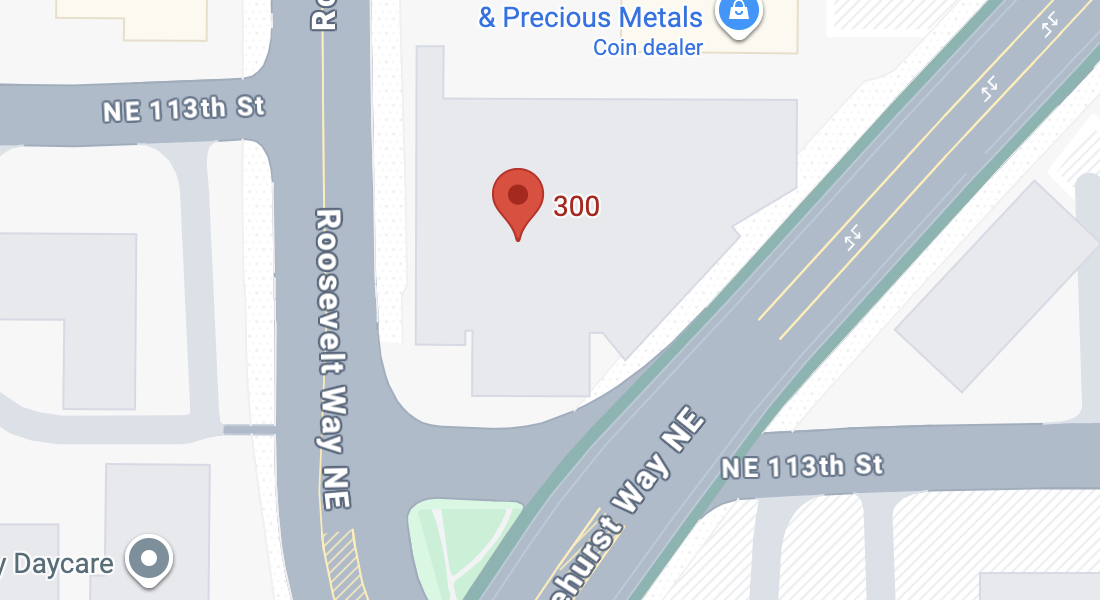
Seattle, WA 98125

Free Consultation (206) 228-2800